Life Support and Hazards
Thank you for printing this page from www.SuperCheats.com.
Remember to come back to check for updates to this guide and much more content for Mass Effect: Andromeda
Follow this guide to hear about updates
Last Updated:
While exploring new worlds and environments, you’ll be often subject to various life-threatening hazards like radiation, toxic air, and extreme temperatures. That’s when the Life Support mechanic of the game plays a huge part. When the life support gauge in the lower left corner of the screen runs out, your health will rapidly decline. Hazard Levels on different planets can be improved by increasing the planet’s viability. For example, the western side of Eos is Hazard LV2 until you reset its vault.
Combat Armor
Your combat armor has an adaptive life support system that can protect you from almost any hazard. However, the period on how it can sustain you will depend on the Hazard Level. Normally, your armor will allow you to operate in LV1 hazards for a considerable amount of time. LV2 hazard can eat away your life support quickly, preventing you from effectively functioning at all. LV3 and LV4 hazards are very severe and your combat armor won’t be able to protect you with it.
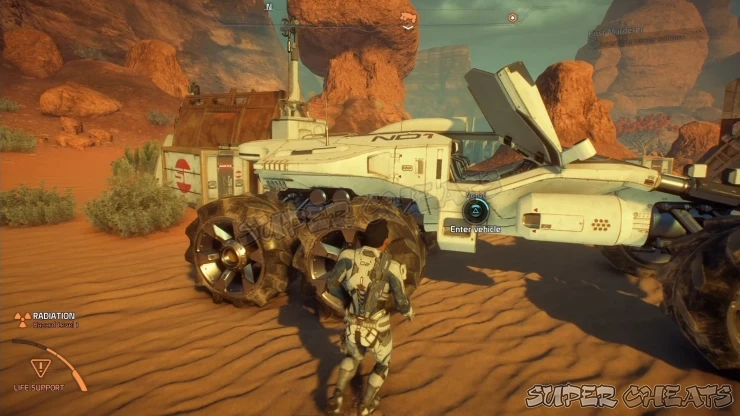
Nomad
The Nomad not only serves as a transportation but it also provides better protection against environmental hazards. When you’re low on life support, retreating back to the Nomad can replenish your combat armor’s LS supply from the Nomad’s reserves. Take note however that the Nomad’s LS isn’t infinite; it can allow you to explore more and protect you better than your combat armor but you still have a find a safe zone to replenish its reserves (like a forward station)
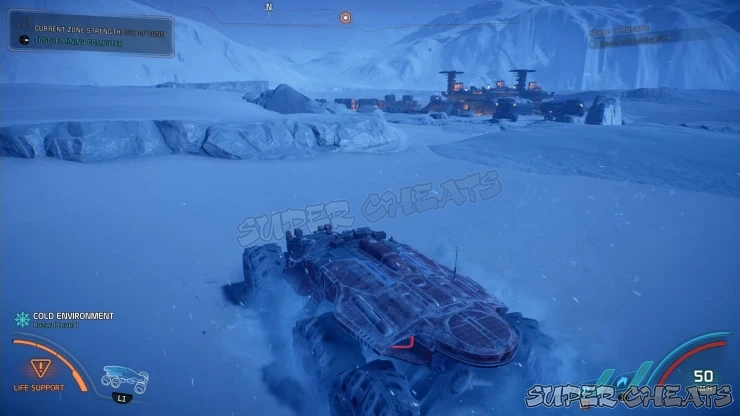
Finding Safety
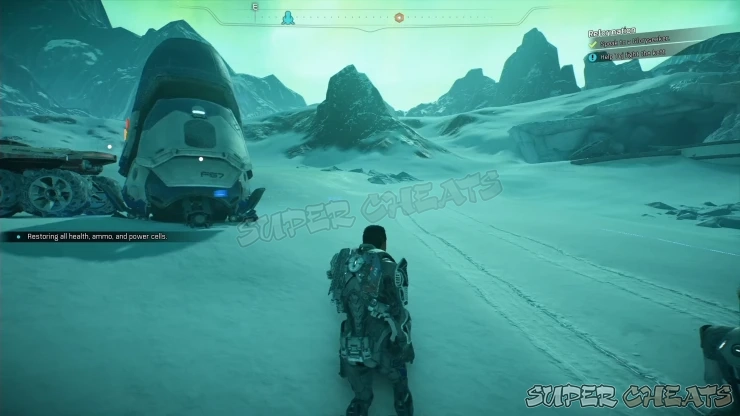
Safe zones vary from every planet and sometimes, specific locations like vaults. Forward Stations are fixed, convenient, fast-travel and resupply points that provides a small safe zone where you can replenish your team and the Nomad’s LS. For frigid planets like Voeld, portable solar heaters found normally in angaran or kett camps can replenish your life support. For radioactive worlds like Eos, special locations with shield masts or pylons can provide relative shelter.
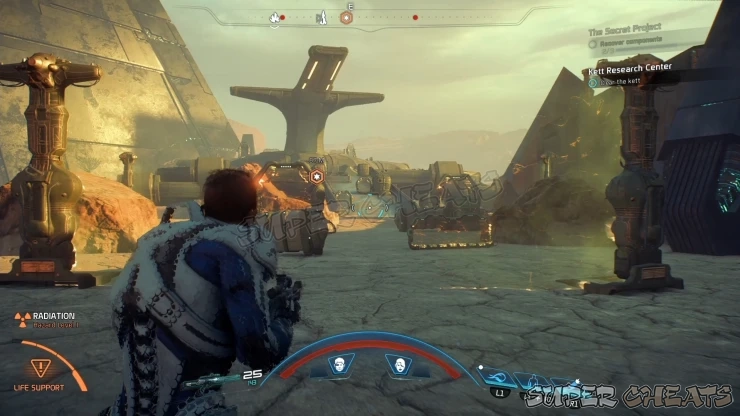
While it’s not technically safe, enemy camps and outposts can be safe havens after clearing all enemies out. They usually have the necessary technology installed in these locations to protect their own people against the environmental hazards.
Anything missing from this guide?
ASK A QUESTION for Mass Effect: Andromeda
Comments for Life Support and Hazards
Add a comment
Please log in above or sign up for free to post commentsNo comments yet. Tell us what you think to be the first.
Table of ContentsClose
- Basics
- Priority Ops (Main Story)
- Heleus Assignments (Nexus)
- Heleus Assignments (Tempest)
- Heleus Assignments (Eos)
- Heleus Assignments (Aya)
- Heleus Assignments (Havarl)
- Heleus Assignments (Voeld)
- Additional Tasks (Nexus)
- Additional Tasks (Eos)
- Additional Tasks (Aya)
- Additional Tasks (Havarl)
- Allies and Relationships
- Trophies
Guide Updates
Get notified of updates to this guide
Many of our guides get updated with additional information. To get an email when this guide is updated click below.
 Join us on Discord
Click to close

